First Week: General Assembly 2026

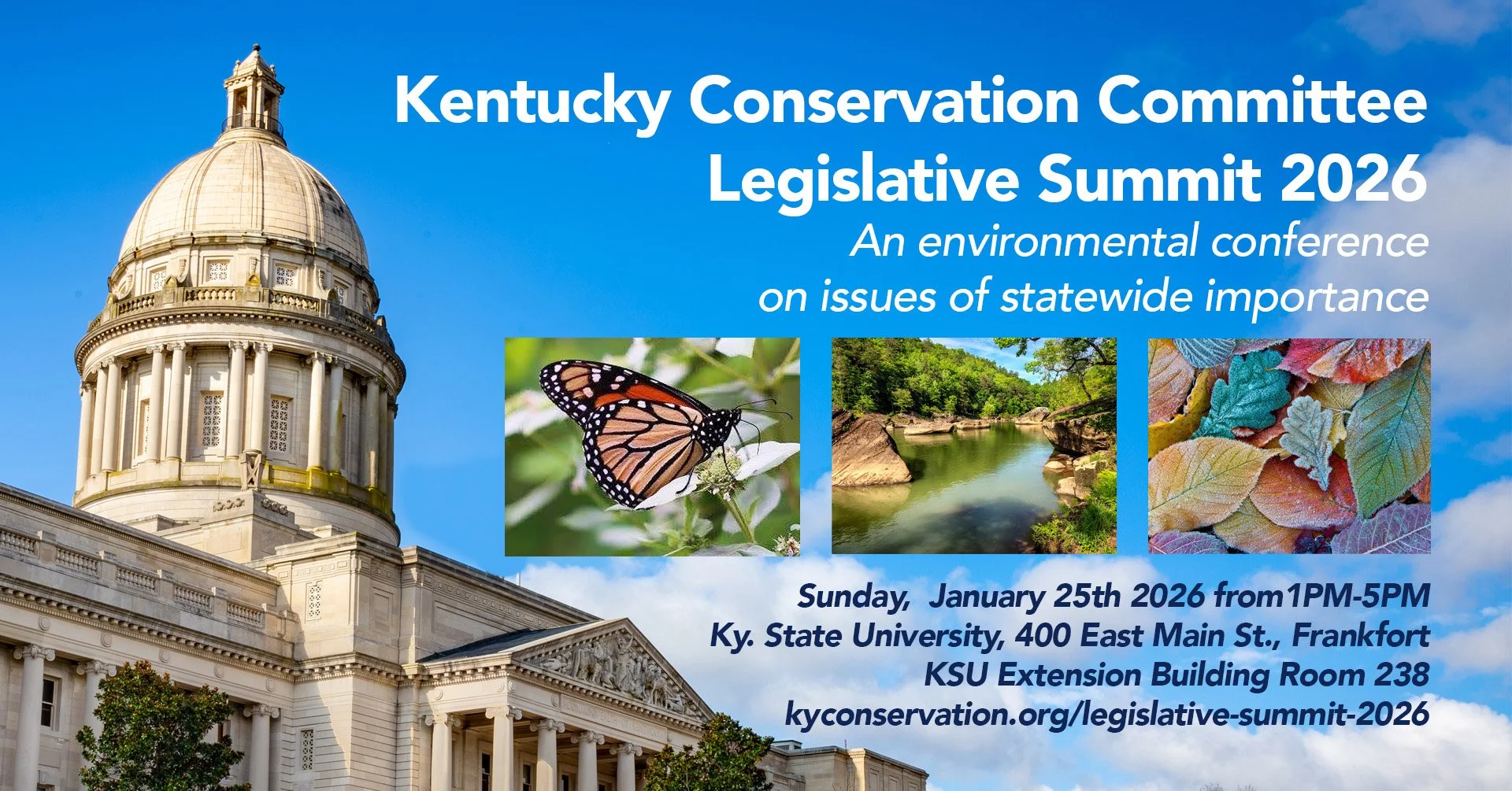
Register for the 2026 Legislative Summit and Watch for our full Bill List next week
In a whirlwind week, the 2026 General Assembly kicked off its 60-day “long” session on Tuesday, January 6th, followed by the Governor’s State of the Commonwealth Address on Wednesday, January 7th.
In four short days, lawmakers have already filed 268 bills and resolutions in the House, and 76 bills and resolutions in the Senate. KCC has already identified a list of over 50 of these bills due to their environmental impacts and we will be posting a follow up email with a list of this first week’s environmental bills shortly. One of the items that we anticipate, but not posted yet at presstime, is Senate Bill 57 by Danny Carroll, where we expect a proposal for nuclear pilot projects. KCC has been presenting on the current state of nuclear energy in Kentucky and will have a session on this at our upcoming KCC Legislative Summit.
But some of the larger themes of the week for lawmakers focused on other issues such as the state budget, education, and housing. And bills filed to date included several that continue to restrict representation and impede our democracy.
We were somewhat pleased, however, that Governor Beshear acknowledged one of the key issues for KCC and our allies in the K4ED collaborative during his “State of the Commonwealth” address, which was the need to protect citizens during extreme weather conditions. While we appreciate that he announced a proposal for $75 million dollar fund to assist “at risk” citizens to pay their utility bills, Kentucky is still one of only a handful of states that does not have statewide disconnection protections. We urge the Governor to do more, and the Legislature to pass statewide protections. You may watch the Governor’s full address here.
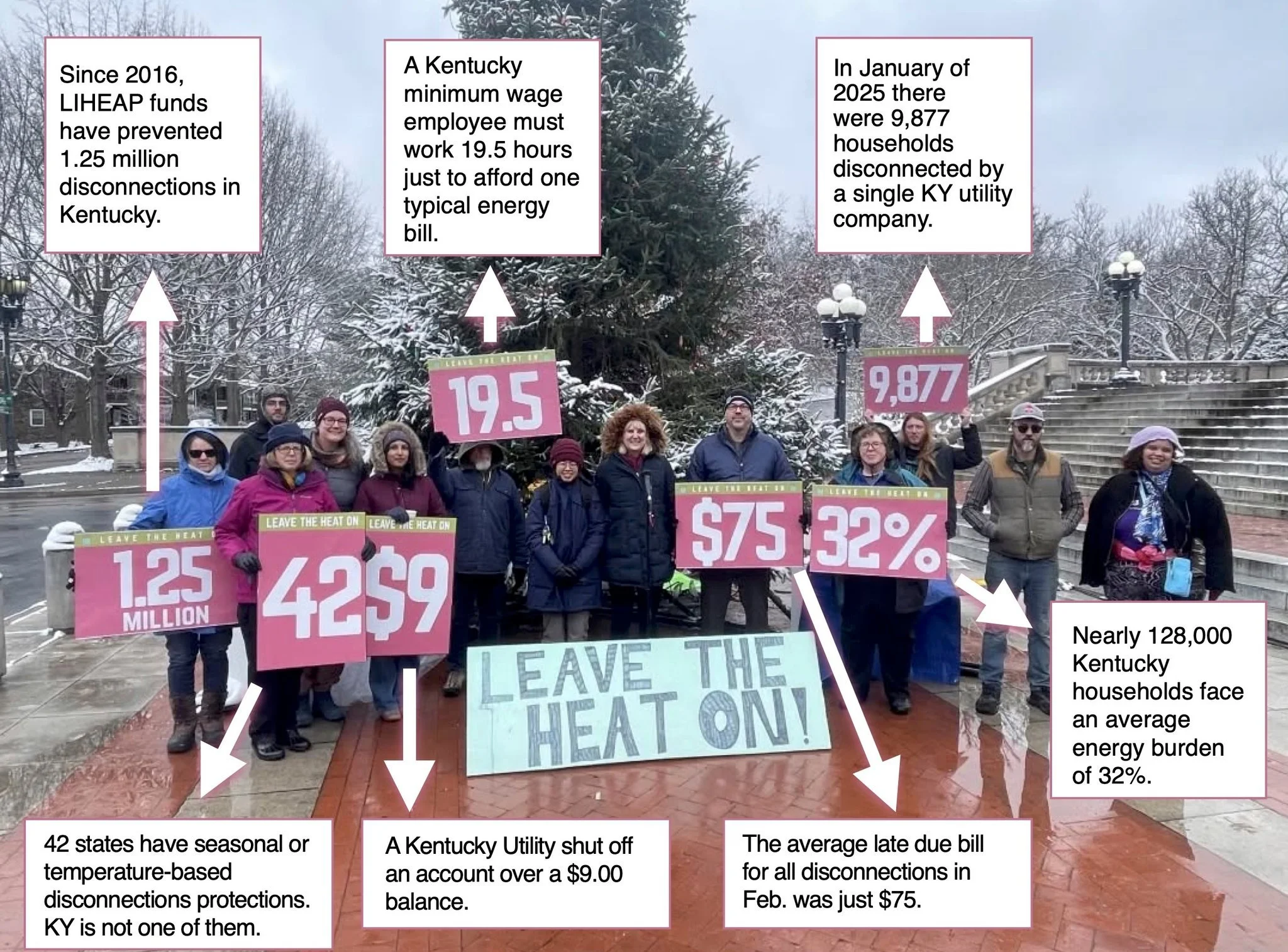
KCC and other orgs last month during the “Leave the Heat On” rally
We were also pleased to see several bills filed that address disaster planning for the state, as Kentuckians continue to get hit by climate disasters.
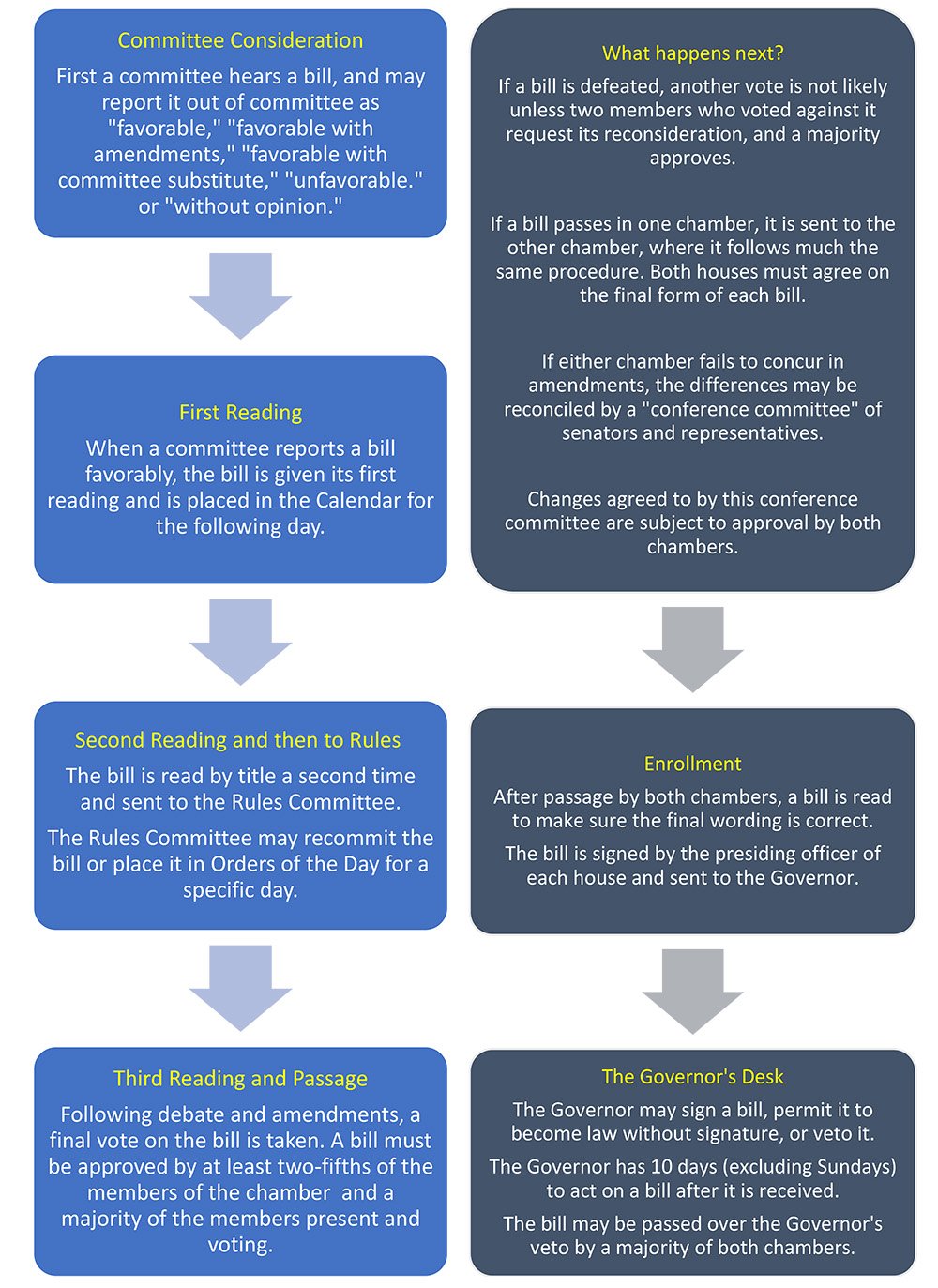
In the meantime, we urge you to attend this year’s KCC Legislative Summit at Kentucky State University on Jan. 25th, where we will do a “deep dive” on legislation to date, and include experts on many current environmental issues, plus provide training on how to make you a more effective advocate. Register for this year’s Summit here.
How KCC Works to Evaluate Legislation:
The Kentucky Conservation Committee was formed 51 years ago as an environmental collaborative to monitor the legislature and executive branch on behalf of partner nonprofits and the public, bringing together experts with a wide range of environmental knowledge on wildlands, urban lands, energy, biodiversity and more to serve on our Board of Directors. KCC board members represent a wide range of environmental interests, and deliberate on policy issues in order to present the strongest and most unified positions possible among environmental groups on critical shared issues. Our board often includes former state employees who have a history of working on state environmental policies. Other board members come from state-based environmental and conservation nonprofits.
KCC’s current board contains experts in outdoor recreation, water policy, energy management, nature-based solutions, natural resource conservation, and environmental organizing. We also have great new candidates running for the 2026 board. Members in good standing are invited to vote for our Board of Directors election with a ballot deadline of January 31st.
In addition, KCC provides two legislative agents throughout the year to review policies, work with grassroots constituents, meet with lawmakers, and collaborate with environmental nonprofits to build consensus around important environmental policies. During the Session, our two Agents scan every bill that is filed and pull out any and all bills that may have environmental implications.
How We Rank Bills:
KCC’s Board and Agents meet weekly to discuss new bills, and provide a “plain english” summary for our members and supporters. Bills are ranked on a five-point scale ranging from “support/oppose,” “STRONG support/oppose,” or “monitor.” As legislation evolves and lawmakers amend bills, we re-assess those bills weekly with modified positions as necessary. The legislative process can be confusing at times, so we follow each bill closely during the entire session.