This past week, we took a long fall drive to a rural lowland area along the Ohio River in Lewis County, Kentucky to see the site of the newly-announced “Prosperity One” nuclear project. This would be a 6.6-gigawatt nuclear energy “campus” that if built, would be the largest nuclear power campus in the nation, with up to six Westinghouse AP 1000 reactors. This announcement came on the heels of the annual Governor’s Conference on Energy and the Environment where Senator Danny Carroll discussed the need for nuclear energy to satisfy the electricity needs of data centers.
While lawmakers have spent years talking about “small modular reactors” as an entry into a new age of nuclear energy, this proposed reactor campus in Lewis County would consist of large, utility-scale “Generation III+” pressurized water reactors, which are the same reactors used at Georgia Power’s Vogtle plant units 3 and 4. As a reminder, the expansion of the Vogtle plant included cost overruns of around $20-23 billion over budget, with a final cost of $36.8 billion, and seven years over their expected timeline. The cost overruns at Vogtle resulted in an increase of residential electricity rates by as much as 20-24%. While these types of reactors produce carbon-free electricity, they also generate spent nuclear waste and radioactive byproducts that remain hazardous for thousands of years, requiring long-term storage.
So what about the site of this new project? Lewis County is largely a rural county, named after Meriweather Lewis and boasts the longest Ohio River boundary of any county in the state. The Ohio River Way watertrail, designated by the Ohio Department of Natural Resources as the longest river trail in the state, describes the Vanceburg/Lewis County area as including “some of its most scenic and least developed stretches” of riverbanks along the Ohio.
Ten miles directly across the river from this proposed nuclear site, on the Ohio side, is the E. Lucy Braun Lynx Prairie Preserve. Designated a National Natural Landmark in 1967, Lynx Prairie was protected to save the best of the few remaining remnants of the once-extensive prairies of this area.
Dr. Braun was one of the first people to conduct scientific research in the field of plant ecology. Her effort to preserve a small xeric limestone prairie, now known as “Lynx Prairie,” resulted in not only the preservation of this small 22-acre parcel, but this first acquisition also acted as the cornerstone of what was to become the 20,000-acre Richard & Lucile Durrell Edge of Appalachia Preserve System. The conservation of this small patch of prairie led directly to the establishment of what would become The Nature Conservancy.
KCC has been monitoring the progress of Kentucky’s nuclear discussion closely since the repeal relating to the construction of nuclear power facilities via Senate Bill 11 (Carroll) in 2017 and we will continue to provide updates on KCC’s nuclear energy webpage.
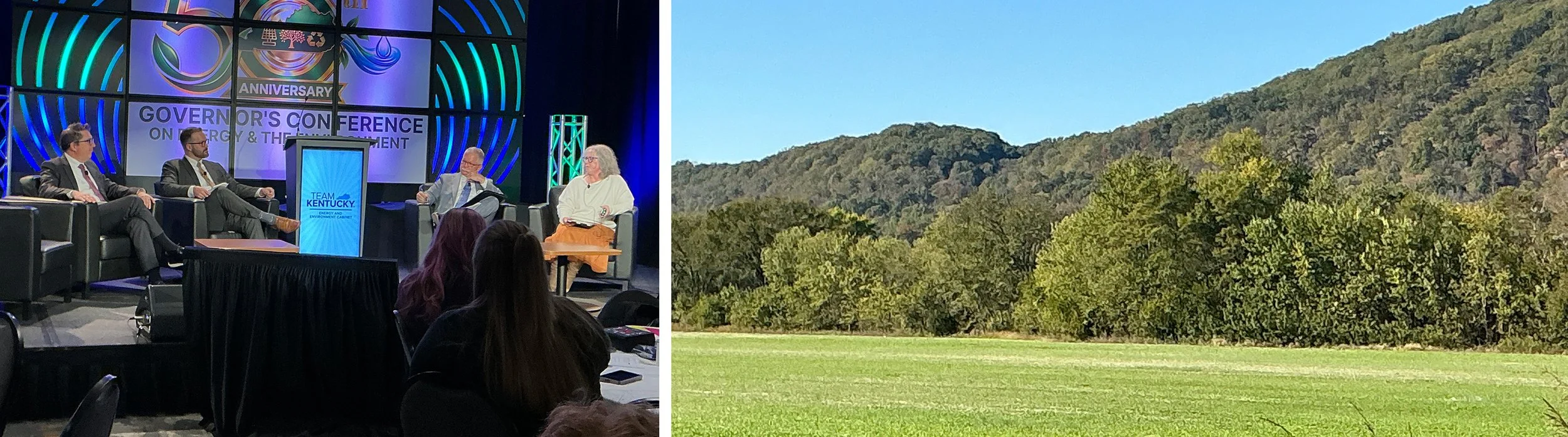
(Left) Senator Danny Carroll discusses nuclear at the 2026 Governor’s Conference on Energy and the Environment. (Right) a view of the bottomland along the Ohio River near the site of the proposed “Prosperity One” nuclear campus.
Vote, Vote, Vote
October 29-31st is the window for in-person, no excuse, absentee voting. General election is November 3rd. More info and resources here.
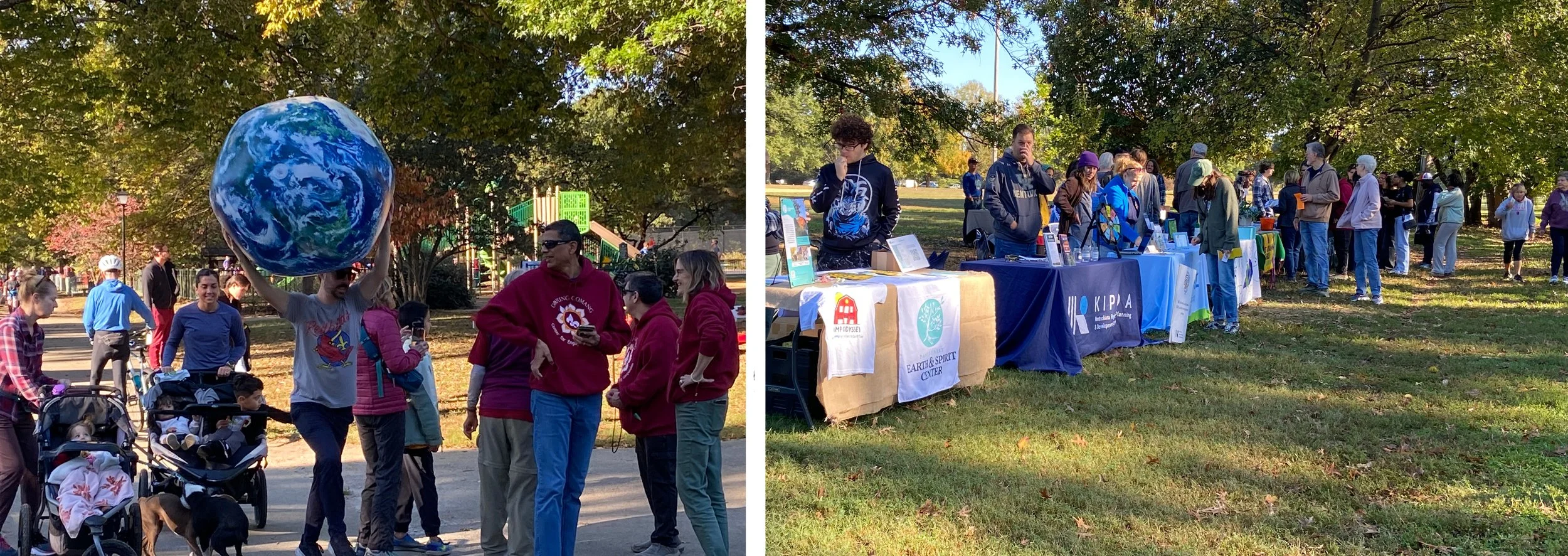
KCC was one of eight nonprofits hosting this year’s Louisville Earth Walk 2026
It Was Great to See You - More Upcoming Events
We want to thank everyone who came out this past weekend to participate in the Louisville Earth Walk. The event at Louisville’s Seneca Park went off without a hitch and the fall weather was perfect for a stroll to celebrate the planet.
KCC will be a guest at this month’s Kentucky Climate Chat hosted by the Kentucky Climate Consortium on October 30th.
Kentucky Voices: Save the date (evening of December 10th) for this year’s Kentucky Voices event in Frankfort, where we will be featuring a screening of “Look & See” to celebrate Wendell Berry. Details at this link.
Nuclear Education Field Trips: We also will be continuing our nuclear education field trips to the Fernald Preserve in Cincinnati, and will be scheduling these “on request” for the rest of the year. Info here.